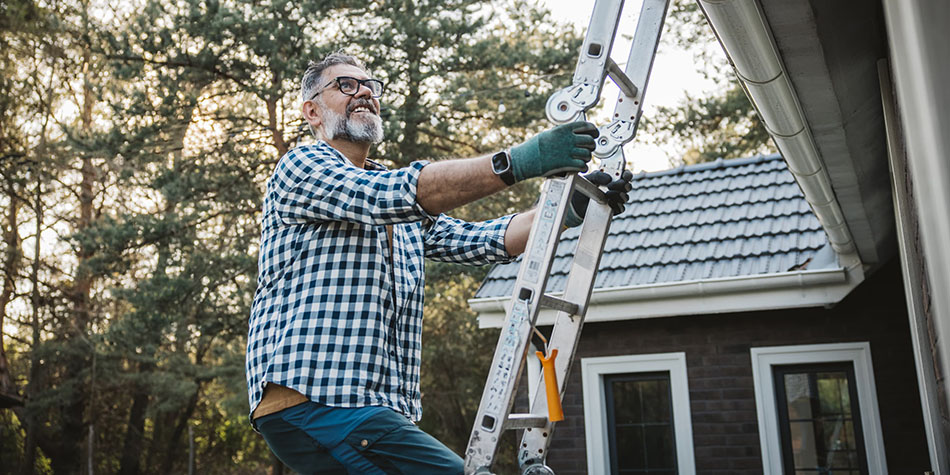
Using ladders safely during spring home projects can help reduce the risk of falls, sprains and other orthopedic injuries.
When spring comes, it brings warmer weather and more time outdoors. Yard work, home improvement projects, sports and travel all increase during this time of year. While these activities are healthy and fun, the risk of sprains and other orthopedic injuries increases. Knowing why these injuries happen — and understanding how to prevent them — can keep you moving and help you avoid unnecessary pain.
Why injuries increase in the spring
After months of colder weather, many people jump back into being active without giving their bodies a chance to adjust. Muscles and joints that were resting during winter may be weaker or less flexible, increasing risk of injury. Uneven surfaces, wet grass, ladders and outdoor equipment can also contribute to falls and sprains.
According to the Centers for Disease Control and Prevention (CDC), falls are one of the top causes of injury-related emergency room visits in the United States, especially among adults ages 65 and up.
Common spring-related injuries
Spring injuries often involve the lower extremities, wrists and shoulders.
Common injuries include:
- Ankle sprains from uneven ground or sudden movement
- Wrist fractures from breaking a fall
- Knee injuries from twisting, not resting enough or excessive exercise after being inactive during the winter
- Shoulder strains and back injuries
How falls and sprains happen
Falls and sprains often occur when you lose your balance or when your joint is pushed beyond its normal range of motion. Slippery surfaces, poor footwear, weariness and hurrying through activities can up the risk of injury. Even what seems like a small fall can result in ligament damage or fractures.
Simple steps to prevent spring injuries
To reduce your chance of injury, take these simple precautions:
- Take time to stretch and warm up your muscles before physical activity.
- Use proper lifting techniques and avoid overloading.
- Keep walkways clear.
- Use safety measures such as handrails when working on ladders.
- Wear footwear with good traction.
- Take breaks from moving.
The National Institute on Aging recommends strength and balance exercises as an effective way to reduce fall risk, especially for older adults.
Returning to activity post-winter
If you weren't too active during the winter, take your time in the warmer months. Increase intensity and length of time carefully. Always listen to your body. Keep in mind, swelling, stiffness or pain that worsens over time could be a sign that you're pushing too hard.
When to see an orthopedic specialist
Some injuries need a professional evaluation. You might need an orthopedic specialist if you experience:
- Pain or swelling that won't subside, even after a few days of rest
- A joint that doesn't look right
- Difficulty bearing weight or moving a joint
- Numbness or tingling
Getting care when you need it
If pain, swelling or mobility doesn't improve, an orthopedic specialist can look at your injury and make a recommendation. Care early on can help prevent long-term complications and support a safe return to activity.
$webqFacilityNumber
Need a Physician?